Showing posts with label body image. Show all posts

The Problem with Fitspiration

Fitspiration
 
The mental and physical state of being inspired by media, pictures, etc., to form a fit body.
 
 
Sounds nice right? It's certainly better than "thinspiration," a hashtag that was actually banned on Instagram because it created a culture where both men and women were doing anything to lose weight and be thin.
 
So yes, fitspiration is a bit better. Or is it?
 
Photo from Pinterest

The model in the photo looks great by most standards, but what many don't realize is her particular lifestyle. She more than likely is a professional fitness model and probably doesn't spend her days working an 8 to 5 job. She spends her time at the gym, or in the kitchen doing meal prep.You won't find her at cocktail parties or happy hour, her gym schedule and healthy eating habits probably don't allow for that.
 
She looks great, yes, but at what cost does the price of looking great come?
 
Photo from Pinterest
Everyone should work out and maintain a healthy lifestyle, but objectifying women's bodies to try to inspire others is not working either. Unless you have the time to dedicate 2 to 3 hours in the gym each day and weigh your food proportionally, chances are you'll find it a bit difficult to achieve this look. Maintaining it is another story.
 
Photo from Pinterest
 
Photo from Pinterest
Slogans such as "She Squats Bro" showcase women scantily clad baring their "assets," and it is just another way of objectifying women as sexual objects. The message of these images come across loud and clear, you should strive to look like the women in the pictures, or at least aspire to. How is this any different than showing skinny fashion models on the cover of magazines? It's still promoting the fact that women, and people in general (I won't exclude men here) value physical perfection.
 
Instead of promoting images supporting any body type, people should be striving for overall health. Did you run 3 miles today? Awesome! Did you do a shoulder and back workout that you're feeling the effects of the next day? Great! Did you skip dessert last night? That's good too- but don't forget to indulge sometimes as well.
 
Comparing yourself or others to images circulating on social media sites is not actually "inspiring" you the way you may think. Instead, you're just comparing yourself to an illusion. You may never look like the women or fitness competitors in the pictures. If you do it more than likely will be hard to maintain- but that's ok.
 
Health is a journey- not a picture. Do what suites you and your body to get there- not a picture. 


My Advice to an 11-Year-Old About the Modeling World

I was recently asked what advice I would give if I were confronted by an 11-year-old girl and her mother on getting into the modeling industry. It was one of those moments where so many thoughts rushed through my head that I wasn't quite sure where to start, or how to even give a semi-understandable answer.

Flashback 21 years.

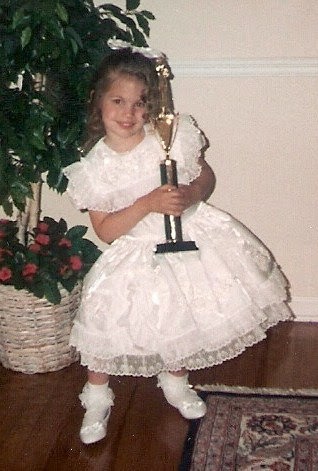
I'm five years old, wearing my first pageant dress, and I have to walk across the stage, smile perfectly, do my turns just as I had practiced, and hope the judges choose me to give the shiny crown to instead of the half dozen or so other shy five year olds with similar bouncing curls and hairdos.


I didn't get the crown, but I did get a pretty tall trophy, which meant the judges must have thought I smiled pretty and did my walk and turns right.

A few years later, around nine years old I enrolled in modeling and etiquette classes. I wanted to be a model when I grew up, and I just knew I was going to be famous. These modeling and etiquette classes gave me confidence walking on a runway and doing local fashion shows at the mall. I had dreams of being "discovered" and found by an agency. I remember an older girl, Tiffany, who was signed by some agency. She might as well have been a celebrity to me, I thought she was so glamorous. She was a model! A real one, and maybe I could be like her.

One night after a fashion show at the mall, Tiffany's mom pointed me out and came over to me. She goes, "That's her! You've got it, you can be just like Tiffany! You are beautiful." I was floored and excited all at once. In retrospect, Tiffany was just your average 14-year-old girl who had a local modeling agency take interest in her. I'm not sure of her whereabouts now, but I'm sure she is living just like the rest of us.

But at that time to me, Tiffany was a supermodel..and I wanted to be just like that.

At 10 years old I prepared for my first modeling convention and competition. I was competing against other hopefuls in swimsuit (yes, at 10 years old) runway, voiceover, commercial and talent. I don't believe I won more than honorary mention, but I was already looking and comparing myself to other girls, both my age and older. I wanted to be the pretty girl, the one everyone liked, the one who was going to be famous...And I knew I would, one day. I was already tall, at 10 years old and 5'2. I would look through the popular magazines and compare myself to what those older airbrushed, women looked like. My cheekbones were high, my lips looked like the girl on this issue of Cosmopolitan, and so on.


 Myself, age 10
 
 Myself, age 12
 
 And thus, the dangerous cycle began. I was always comparing myself to actresses, models, and even in my young pre-teen and teenage years I was already thinking of what I could do to change my looks. Everything from hair color, tanning, cute outfits, plastic surgery- It didn't matter. I saw my body as an imperfect canvas, and that in order to be happy I'd have to actually win contests and have that sex appeal that could guarantee that no guy would ever leave me, and that I had the world in the palm of my hand.


Myself, age 18

According to an article on HuffPost Healthy Living, the National Association of Anorexia and Nervosa and Associated Disorders, I wasn't the only young girl with thoughts like these, and I'm still not. Nearly 70% of girls in grades five through 12 said magazine images influence their ideals of a perfect body.

What those girls don't realize is that those pictures aren't the truth. They aren't reflections of the average woman's body.

When I got into college, I took the modeling competitions up a notch. I started participating in more photoshoots with anyone that I thought could take some real photos, and I primarily just used those pictures for my social media profiles. I thought a hot looking profile picture would mean more people would like me. I also thought the more swimsuit competitions I participated in and won, the happier I was going to be.

 
Myself, age 23, Swimsuit USA competition in Playa Del Carmen, Mexico

Swimsuit competitions started to become what I revolved around. I thought it spoke of me as a better person, someone that other girls were envious of. I thought the better I looked, the better I actually was. In reality, when I was winning these contests and regarded them as a hobby and a job, all I was doing was comparing myself to other women. If I didn't place in a contest, I thought maybe it was because I was too tall. Maybe I was too big- maybe I should have dieted more. Maybe I didn't do my hair right...or...maybe they ARE prettier than me. Maybe I should do something drastic about it.

You see, starting in the modeling industry gave me a sense of false confidence. It's false, because you're basing your self-worth and happiness on something so superficial. That's not happiness.

The older I got the more I realized that maybe these issues of constantly wanting to change my appearance were a little deeper than I thought. During an international competition in Las Vegas, NV one year, I realized that even dieting wasn't going to help my waist look any slimmer- the only choice I'd have at looking more petite is to have a rib removed, creating a smaller rib cage and waistline. Now of course, this was just a thought, but it signified something much bigger. I began to realize at this point I had fallen into body dysmorphia.

According to the Anxiety and Depression Association of America, people who suffer from body dysmorphic disorder take their perceived flaws to the extreme. They can't control their negative thoughts of their physical appearance, no matter what others may say. To the sufferer, the perceived flaw causes much emotional distress, and they may go to any length to correct the "problem," or even avoid social situations altogether.

Rachel Scherdin, registered dietitian, also knows first-hand what can happen when young girls pour their self-worth into the modeling industry.

"It's a destructive environment. It's a breeding ground for negative body image, as you are constantly comparing yourself to others and being compared to other models. What once used to be fun starts becoming an obsession."

Jessica Lundy, a successful promotional model and National Physique Committee fitness competitor says she personally didn't start modeling until she was old enough to understand the industry.

"I would never push it on my daughter, but if it was something she wanted to do I would just know to do my research with everything. I would also advise her to remain balanced and grounded, and to always know who you are and what you want."

Now, back to the 11-year-old wanting to break into the modeling industry.

My advice to you: know who you are and what makes you happy. Don't compare yourself to others, life isn't a competition based on looks. Focus on being happy and healthy, and don't worry about how you look. Looks are not going to bring happiness, I promise you. Focus on doing what you love, participate in sports, excel in school. Make your goals something you can obtain, not something where you depend upon the judgement of others.

Women have been objectified for decades as sexual objects. It's our job to help turn that around.

Miss Indiana and her "Normal" Body

With all of the buzz flooding around Miss Indiana's "curvier," "thicker" and "normal" body, I wanted to take a step back and look at what society is actually doing here.

Yes, I tuned into the Miss USA pageant last Sunday night. Growing up as a little girl I loved watching pageants on TV, but I'll be honest- I was debating watching this debacle. Not to completely bash pageants, but I do know what it's like competing in them and the idea it gives society, as well as the women in them. Not to mention, not all pageants are as sugary sweet as they seem to be.

So let's say you make it as big as the Miss USA pageant- a really big feat. How does the rest of society look at this? I know by the flooding on social media, everyone was rooting for the contestant that represented their home state, and, of course, who they thought was the best looking.

Because in beauty pageants, the best looking is the best choice.

In this type of atmosphere people are drawn to be supportive of whoever the most beautiful contestant is. It's all about the hair, the makeup, the slender body. Women being paraded around based on their beauty. I know, there is an educational and philanthropic aspect to it, but in beauty pageants, if you don't have the look, you don't have a chance.

From being a woman and knowing body sizes, I can easily tell most of the women in the Miss USA pageant are easily a size 0, maybe a 2. I can tell from the slender waist lines and bone structure even just from a TV. Miss Indiana 2014, Mekayla Diel displayed a shape much smaller than the average American woman, and has received more attention for having a "normal" size body than the winner of the pageant did for winning.


Okay for one, how is this shape "normal?" How can anyone's body be classified as "normal?" Also, it is widely known that Miss Indiana's shape is not the size the average American woman is.

Oh, but wait. This is a beauty pageant.

This is what society is lead to believe- that in order to be beautiful a woman must be very tiny, have a nice round butt (no cellulite please) a nice bosom (no breast implants, only natural, but they can't be too small) and 6 pack abs (not too manly though) with nothing extra.

And society loves this. Many women continually bash their "normal bodies" because their stomachs aren't completely flat. They aren't the same size they were several years ago, and they don't look like the hottest Hollywood actress.

I don't expect society to change, but what we can do is create awareness and teach ourselves, our daughters and our sons that true beauty is much more than skin deep. After all, who more do they look up to besides you?


Magazine Covers and Body Image: Not Buying it!


Taking a stroll down any supermarket or convenience store magazine isle is enough to make me, at 26 years old, gag. Countless images of beautiful women in bikinis, talking about how they dropped 15 lbs instantly, to the body and cellulite shaming images marked “you’ll never guess who!” Even if I let myself walk down those isles, I admit if I'm not in the best frame of mind they can get me down.

Even fitness magazines bare perfectly sculpted bodies, who no doubt have some sort of Photoshop action going on.  While I no longer have the same body I did back in my competition days, these magazines even hammer into my head what women AND men (I won’t leave the guys out here) should look like. And of course, they’ll give you the best 15 minute work out tips and the best way to shape up your rump as well…Because we all know, that can use some work.

While I agree health and fitness are important and are essential to leading a healthy lifestyle, not every woman has to be 5’2 105 lbs to be the epitome of health.

We are sending the wrong message to our girls and women here on what healthy, normal bodies look like.

I have recently been inspired by several stories of strong, powerful women in the media.

Brooke Birmingham, lifestyle and fitness blogger of BrookeNot A Diet, lost 172 lbs and channeled her weight loss journey for all to read. Recently, she was contacted by Shape Magazine who wanted to write a story on her weightloss success.   

Brooke happily complied and sent along this picture to show what I real woman’s body looks like after losing 172 lbs, and not being retouched.

Photo from www.brookenotonadiet.com

Shape Magazine wrote her back saying they were unable to use the bikini top photo and wanted one with a shirt. Brooke questioned this, and then later declined having her story written if Shape would not print the photo.

All I have to say- kudos to Brooke for standing up for something she believed in! Shape Magazine is HUGE, and to turn down her chance to have the story run for something she believes is amazing.


After all of the media attention, countless comments, calls from Good Morning America, The Today Show, and more, Shape Magazine made arrangements with Brooke to be featured in an issue with 5 other “real” women who have gone through extreme weight loss.

They will be able to be photographed in whatever outfits, or bikinis, they choose.

I say that's quite an amazing turn out for Brooke, and for women everywhere.


What are your thoughts on Brooke's story?

The Words of a Mother

Throughout this project, I have talked of different issues impacting women and young girls. I've talked to a group of pre-teens, I've shown videos on body image- but I have yet to talk to a mother.


Although I have no children of my own (yet!) I often think of how I would like to raise children, and how I would go about instilling morals in them, especially in today's widespread social media usage. Usually I think I wouldn't let my kids have phones, but I'm not sure how likely that would be.


To get a better idea of what it's like being the mother of teen girls, I spoke to Sherrill Shiraz, mother of two girls ages 12 and almost 14. She gave some great insight on what it's like raising a family in a time where everyone is so connected. She also spoke on weight loss and wearing makeup.


"Both of my daughters have Instagram and Snapchat, no Facebook, and no Twitter," said Shiraz.. "I don't monitor what they post enough, but my friend is friends with them and she let's me know if she sees anything I should look at."


While both of her daughters have cell phones, Shiraz sets specific times when they can or can't use them.


"They are not allowed to have the phone at the table or when we are eating in the kitchen. Also not when doing homework. Otherwise my husband and I keep an eye on them and if we think it is getting out of hand we remove it. The phone is the primary privilege we take away from the younger daughter. My oldest rides horses, so we use that as leverage," said Shiraz.


Shiraz definitely thinks the media pressures women to look a certain way, and she expressed concern for her daughters.

"I tell my girls not to look at any clothing size tags because we can cut them out and nobody has to know the size- just look at how we feel," said Shiraz. 

Shiraz recently lost 30 lbs, mainly for health reasons.


"I believe we should all appreciate our body and that we should try to stay healthy- that was my main motivation for losing weight. I like the way I look now and that I can wear different clothes. I think in a way that the motivation to stay thin or healthy is not 100% negative because there is an underlying benefit for our health, but when we judge ourselves because we are not 'thin enough,' then that is bad," she said.


Shiraz expressed concern for her daughter watching videos on YouTube. "She does not understand that these [YouTube videos] are really like advertisements and many of these people are wearing clothes and using products that they are paid to use," she said.


As far as makeup, I asked Shiraz if she herself wore any, and whether she let her daughters wear it as well.


Shiraz said that while she does wear some eye makeup and lipstick, she makes sure to use good moisturizers but doesn't care too much for foundation makeup.


"My 14-year-old started wearing makeup this year and her younger sister [almost 12] has just started wearing some cover-up for her acne and some mascara," she said.

"I have never said they can't wear it, but I have never encouraged them to wear it, so I guess I am neutral. I do comment negatively if I see someone with lots of makeup on just because I think it is bad for their face and also if it looks unnatural," said Shiraz.

Shiraz said her oldest has taken an interest into learning how to apply makeup.

"I think it's important for them to experiment with their femininity and makeup is part of that in our society," said Shiraz. "I am sure her father would say something if she put on too much though!"

Shiraz says she strives to teach her daughters that there are many other things to do other than shop or worry about clothes, and currently she is getting them involved in local charities, and teaching them how to make their own clothes.

The Media Through the Eyes of a Young Girl

Let's take a look outside the box for a minute. Look through the eyes of a young girl. What does she see?

Maybe this video will help you. Is it the thousands of advertisements she sees on TV, showing scantily clad women? Is it the diet pills and diet fads she sees people taking and reading about? What about the advertisements for make-up and beauty products that always need to "brighten, tighten and tone?"

She sees all of it. But how does she make sense of it?

 As a society in our adult lives we have become desensitized to all of the marketing ploys and advertisements for women to constantly improve their looks. I'll admit it, until recently I didn't pay close attention to the message media is always sending out to women. In a sense, I am a victim myself.

In order to be happy, you must be thinner, taller, smaller, wear make up, wear sexy clothes, take diet pills...and so on, and so on, and so on...

My classmate, Michelle Manning, recently created this remix video on body image for our video editing class. I was so moved when I saw it, I was almost in tears. 
Take a look at the video, and see the media through the eyes of a young girl.

Beauty Mash-up from michelle manning on Vimeo.

Michelle is currently writing a blog on Ways to Prevent Child Abuse. To read more, click here. 

 
Blogging tips